Lost pub · Caldewgate
The Pheasant Inn
- Built
- Late 18th century houses, a pub by 1865
- Gone
- 2000
- There now
- Grade II listed, no longer a pub
- Address
- 29 Church Street
- Where exactly
- Placed from the Ordnance Survey grid reference, NY3934655897, in Historic England's gazetteer of the scheme's premises. The building's use in 2018: restaurant (Golden Pheasant).
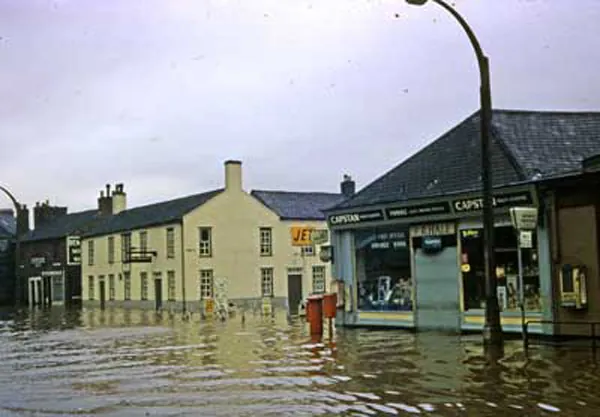
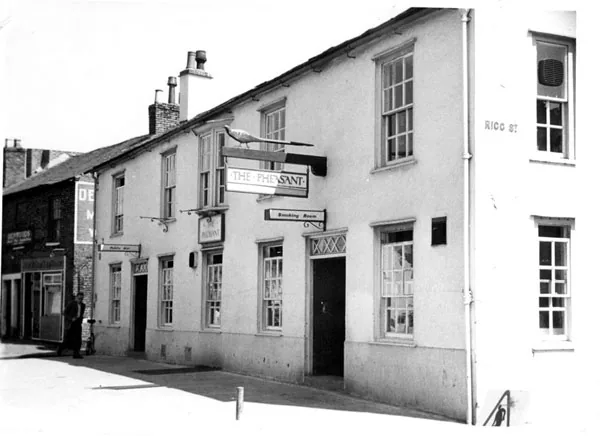
Originally a row of three late eighteenth-century houses at 29 Church Street. It was converted from houses, not built as a pub: work on the building has shown domestic windows and doors under the render. It was trading by 1861 under the railway's name, after the Silloth line that opened in August 1856, and the name came in several forms: the Silloth Railway Hotel under Samuel Sewell in 1861, the Silloth Railway Tavern in January 1863, the Silloth Railway Inn when it was offered to let that May and on the 1865 Ordnance Survey map, and simply the Silloth Inn by 1867.
Thomas Smurthwaite kept it from about 1862 and was fined three times for breaches of his licence; at the Brewster Sessions of September 1867 his full licence was withdrawn, and a special sitting refused to restore it in spite of a memorial from his neighbours. In August 1868 the new keeper, Edward Callagan, applied for the spirit licence back for a house he called 'well adapted for the purposes of an inn', and was refused.
It was first called the Pheasant in the 1873 directory, and Thomas Henderson held it as the Pheasant, still a beerhouse, from 1873. For the royal visit of September 1877, when Princess Louise and the Marquis of Lorne came through Caldewgate, the Pheasant 'manifested its loyalty with a streaming St. George's Cross, and other flags'. It was sold in 1894; in 1899 the licence passed to James Wyles from the Royal Oak across the road, and plans drawn by the architect Henry Higginson in 1900 suggest it had a spirit licence by then.
It was a Carlisle Old Brewery house when the state took it in August 1916, and it was on the first list of seven houses the Board's local committee recommended for 'very large alterations', reported on 1 November 1916, when the general manager hoped to finish them all inside four months. It reopened on 26 May 1917 with no formal ceremony, the Mayoress performing a more official opening of the reconstructed first floor a few days later, on 31 May. It was one of the seven food taverns the scheme opened in 1917 and 1918, and Olive Seabury called it the Board's first serious attempt at an off-sales food shop. The Cumberland News of 13 October 1917 lists it among the Board's houses for workers in Caldewgate, with arrangements for the off sale of food.
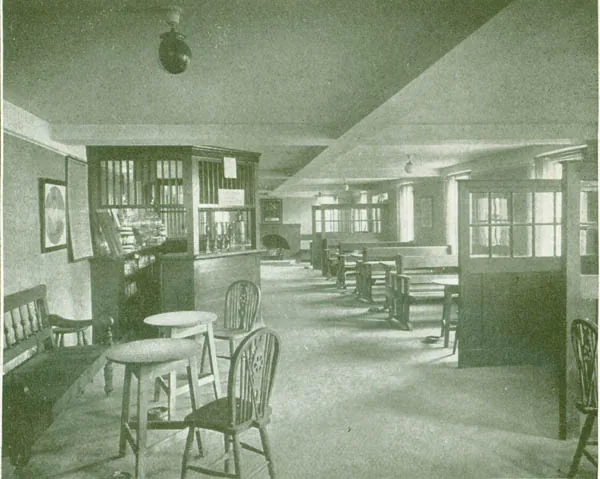
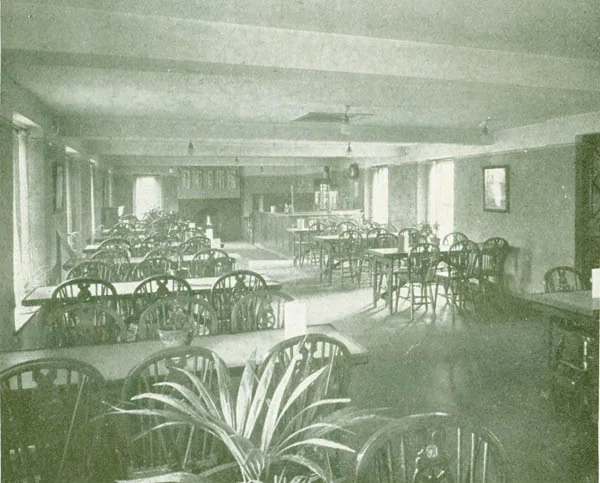
The thinking was simple. It stood opposite a biscuit factory employing large numbers of women, and the building has three frontages, so each kind of customer got a door of their own. The ground floor was knocked into one big 'brasserie' serving drink to men only, entered from Church Street. The factory girls' cafe and rest room, selling no alcohol at all and with no way through to the bar, were upstairs, reached with the manager's house from Rigg Street.
The cooked-food shop, where customers waited while soup, stew, pies, bacon and egg and jugs of tea came down by lift from the kitchen upstairs, opened on Queen Street, which explains why the scheme's 1920 roll lists a Pheasant on Queen Street rather than Church Street; Historic England's gazetteer has no other Pheasant in Carlisle. There were reading and writing rooms stocked with newspapers and writing paper, one downstairs for men and one upstairs for women.
The off-sales shop sold children soup at a penny and stew at twopence, and a photograph of about 1930 shows children queuing there for their lunch. When the Joiners Arms across the road was rebuilt in 1918, it was made an ordinary pub rather than another food tavern, because the Pheasant already was one. The cafe lasted until 1963, when Historic England's gazetteer has it closing for want of custom. By 1966 the pub's sign was a pheasant carved in wood by the scheme's own works department, and it had a discotheque.
The scheme sold it to Greenall Whitley on 3 April 1973, or 2 April by one record. It closed in 2000, or 1999 by one record, and in April 2000 it was sold at auction in Manchester to a Carlisle buyer, expected to turn it into a restaurant; it spent a while as the Golden Pheasant Chinese restaurant. The building is Grade II listed. Not the Pheasant at Cumwhitton, which is still serving.
Sold to Greenall Whitley as part of Group 2, handed over on 3 April 1973. Who bought the rest
Photograph
Sources 15
- The State Management Story
- The Control of the Drink Trade (Longmans, Green & Co., 1919), pp.216-217
- CARLISLE_PUBS_Ver_3.xls (Mike Tuer's pub database)
- Historic England, Countering the 'deadliest of foes': public houses of the Central Control Board and the State Management Scheme, 1916-73 (Clare Howard, Research Report 89-2018): Appendix C, gazetteer of scheme premises
- Historic England, Countering the 'deadliest of foes': public houses of the Central Control Board and the State Management Scheme, 1916-73 (Clare Howard, Research Report 89-2018)
- The State Management Story documents: H. B. Wilson, History of the Carlisle State Management Scheme 1916-1974 (Home Office, about 1975)
- The State Management Story documents: Evening News supplement, Half a Century of the State Management Scheme, 12 October 1966
- The Cumberland News, 13 October 1917, p. 5: 'Control Board's restaurant scheme complete' (via newspapers.com)
- The Cumberland News, 4 November 1916, p. 5: 'The Control Board: progress of the Carlisle scheme' (E. C. Sanders's report of 1 November) (via newspapers.com)
- Carlisle Patriot, 22 February 1867, p. 7: 'Carlisle Town Council: the Public House Closing Act', with the innkeepers' memorial (via British Newspaper Archive)
- Carlisle Examiner and North Western Advertiser, 1 October 1867, p. 3: 'The Revocation of Public House Licences' (via British Newspaper Archive)
- Carlisle Patriot, 28 August 1868, p. 7: 'Annual Brewster Sessions' (via British Newspaper Archive)
- The Cumberland News, 20 August 2021, p. M18: 'The changing names for a Carlisle pub' (via newspapers.com)
- The Cumberland News, 14 April 2000, p. 4: 'Drinkers call time on the local pub' (via newspapers.com)
- Carlisle Journal, 21 September 1877, p. 6: the decorations for the royal visit (via British Newspaper Archive)
Also lost on Caldewgate
16 other lost pubs stood within 250 m of here. See them on the map
Still serving, near where it stood
-
70 maway
-
220 maway
-
410 maway
-
440 maway