Durdar, Carlisle
Carlisle Racecourse
Bars at the racecourse at Blackwell, open on race days to everyone at the meeting. Carlisle's racing goes back to the Elizabethan racing bells.
- Address
- Durdar Road, Carlisle CA2 4TS
- Phone
- 01228 554700
History
- Racing bells
- Dated 1599 and, by some accounts, 1559
- On the Swifts
- Race bills from 1759; left in 1904
- Army camp
- Lonsdale Battalion, 1914-15
- First Tote betting
- 2 July 1929, with Newmarket
- Present grandstand
- 2002
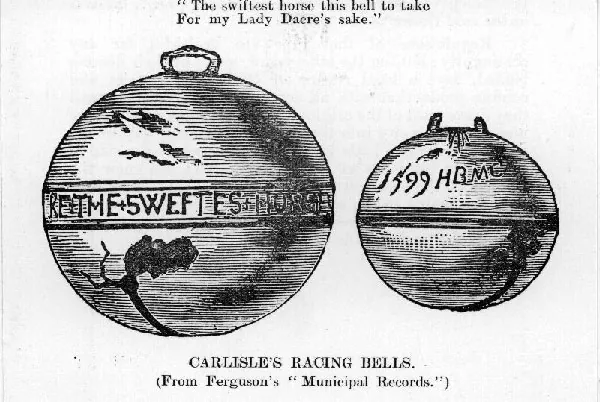
Nobody quite agrees when racing at Carlisle began. The course itself says 1599, the year cut on the smaller of its two racing bells beside the initials of the mayor, Henry Baines. The larger bell, given by a Lady Dacre and inscribed 'The sweftes horse thes bel to tak for mi lade Daker sake', is dated 1559 by other accounts, which fits the course's own phrase about the second year of Elizabeth's reign. Which Lady Dacre is disputed too. Either way they are reputed to be the oldest racing prizes in Britain.
The bells were thought lost until a late Victorian find in a box in the town clerk's office. A civic order of 1619 had already asked for the silver arrows and the horse and nag bells to be called in, to maintain a horse race for the city on the king's moor, so the prize was old even then. They belong to the city's collection, and the winner of the Carlisle Bell takes home replicas.
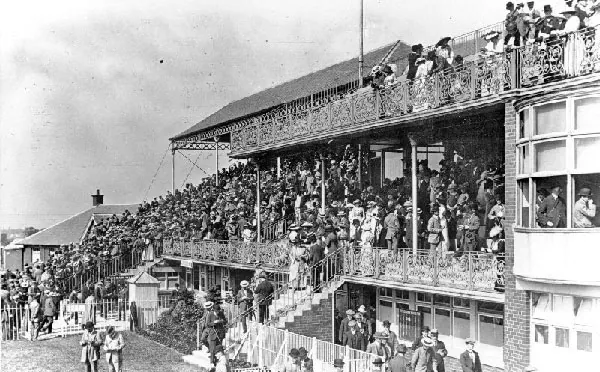
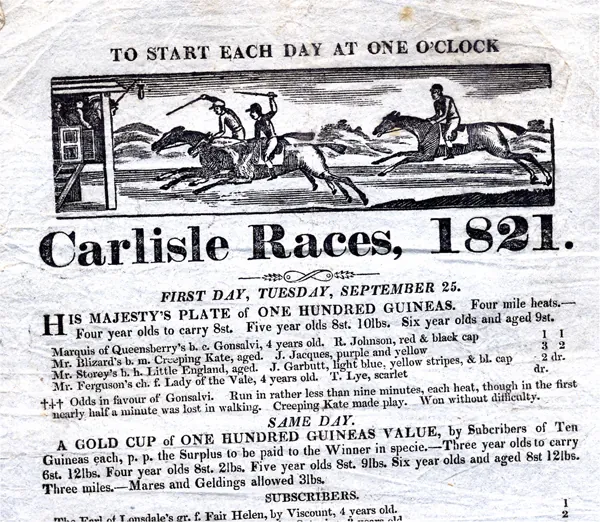
The races were run on the Swifts by the Eden for most of their history: printed race bills put meetings there in 1759 and 1764, though a bill of 1820 has a cup run for over Kingmoor. The grandstand on the Swifts, built in 1839-40 with a hotel inside it, still stands as the Turf. In 1904 the racing moved out to Blackwell, and the Carlisle New Racecourse Company was registered in 1906.
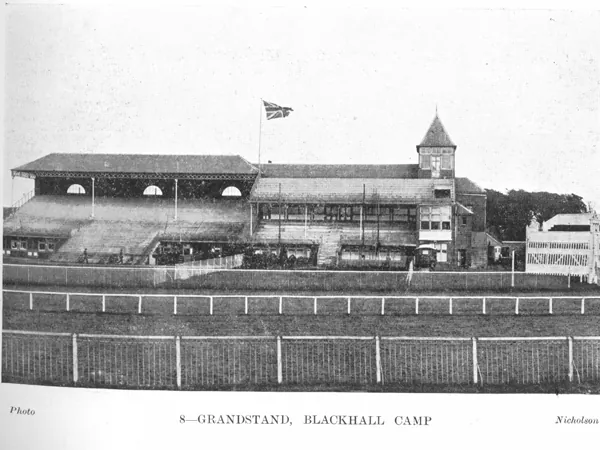
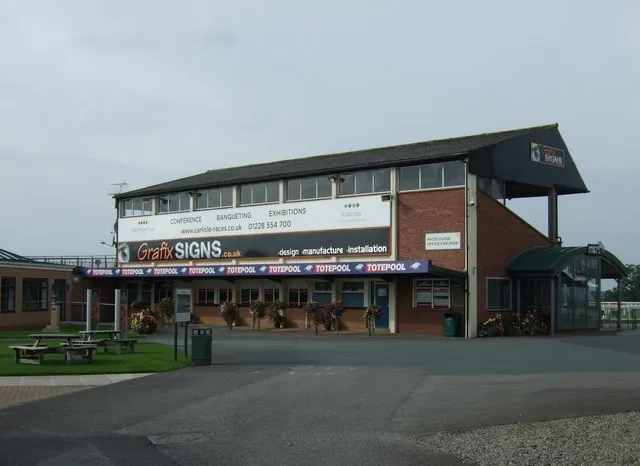
In September 1914 the new course became the first billet of Lord Lonsdale's own battalion of the Border Regiment: the early recruits slept in the grandstand and the stables until huts were built, and the battalion left for France in November 1915. On 2 July 1929 Blackwell and Newmarket saw the first Tote betting at British race meetings, after a trial at Carlisle the day before in which soldiers of the Border Regiment volunteered as punters. The course joined the Jockey Club's group in 2001, and the present grandstand dates from 2002.
For a drink, it is a race-day place. There are two bars in the Bell Hall on the ground floor of the grandstand, Monet's Bar on the way from the stand to the parade ring, the Red Rum Bar beside the ring, and the General's Bar and BBQ by the main turnstiles. The racecourse calls them open to all, which means everyone through the gate. The function suites are let for weddings and conferences on other days, but there is no public bar then. Like Brunton Park, it is one of the most open venues on this site and one of the most closed, depending on the day.
The state scheme left no known trace at the course itself, but it did rebuild the Black Lion at Durdar in 1929, Harry Redfern's first pub in his own style, and for the rest of the century that was the racegoers' local.
- Live sport
- Family friendly
- Food
- parking
- Historic interior
- seasonal
Photographs
Opening times change often, so check with the pub before you set off.
More like this
- Live sport pubs in Carlisle
- Family friendly pubs in Carlisle
- Food pubs in Carlisle
- Historic interior pubs in Carlisle
Nearest to here
-
1.6 kmaway
-
1.9 kmaway
-
2.0 kmaway
-
2.5 kmaway
Lost on Durdar Road
- The Black Lion gone 2024
- The White Ox gone 2007
Lost in Durdar
- The White Quey gone 2008
Sources 15
- Cumberland Council licensing register: premises licence PL344, from August 2017, and a betting premises licence for the track
- Carlisle Racecourse (Jockey Club): history
- Carlisle Racecourse (Jockey Club): food and drink, the bars open to all
- Wikipedia: the Carlisle Bell
- CAMRA WhatPub: Carlisle Racecourse
- Wikipedia: The Tote, first used at Newmarket and Carlisle on 2 July 1929
- Hansard, 16 July 1929: the totalisator trial at Carlisle on 1 July, with Border Regiment volunteers
- The Lonsdale Battalion: Blackhall Camp, at the racecourse, 1914-15
- BBC Cumbria, June 2007: the Carlisle racing bells and the Cumberland Plate
- Cumbria Crack, June 2017: the bells return to Carlisle for Bell and Plate day
- Jockey Club: our heritage, Carlisle added in 2001
- Jockey Club, June 2019: the Swifts Restaurant and Patterson Suite, for hire on non-race days
- Historic England list entry 1218199: the Turf Inn, grandstand hotel of the Swifts racecourse, 1839-40
- Companies House: the Carlisle Racecourse Company Limited, incorporated 1906 as the Carlisle New Racecourse Company
- Cumbria Image Bank: race bills of 1759, 1764 and 1821 for the Swifts (ct17649, ct17650, ct17651) and of 1820 for Kingmoor (ct40575)
Open question
What we don't know yet
Who ran the drink at Carlisle races, on the Swifts and later at Blackwell? Race-week booths, the grandstand refreshment rooms and their licences must be in the Carlisle papers' race reports, and nobody has pulled them together. And did the state scheme have any hand in the course's bars after 1916?
If you know the answer, or where it might be found (an old photograph, a family story, a document), tell us and it goes into the history above.