Little Corby, Carlisle
The Otter Inn
Village pub out at Little Corby with a short menu done well and some of the cheapest prices round Carlisle. Limited opening days.
- Today
- See opening hours
- Address
- Little Corby Road, Little Corby, Carlisle CA4 8QQ
- Phone
- 07984 526080
Also known as The Haywain
History
- Distinction
- The only pub in the area kept out of State Management
- Formerly
- The Haywain
In the 1960s, if you lived in Carlisle and had a car, the pub of choice was out at Little Corby. Mike Tuer's records put it plainly: the Haywain, as the Otter was then, was popular because it was just outside the State Management Scheme. From the First World War to the early 1970s it is recorded as the only pub in the area not under State Management control.
Think about what that means. The Apple Tree, the Cumberland, the Wheatsheaf, the Crown at Wetheral, the Stag: nearly everything for miles around spent fifty-seven years belonging to the government. This one stayed in private hands the whole way through.
It started life as the Plough, around 1822 by Mike Tuer's records, and the Cumberland News's reports of the Brampton bench show it changing hands like a private house. In April 1921 the temporary transfer went from the late John Jefferson to his widow. In June 1927 the full transfer went from Mrs Mary Jefferson to Thomas Yare of Great Corby, and in June 1946 from Yare to William Mark, who said he had managed the house since the war but never held the licence. On 27 September 1957 Telford & Scott advertised it as a fully licensed free house, a freehold with the owner retiring, to be auctioned unless sold privately. The scheme's houses were not sold until 1972-3.
As the Haywain it advertised in the Carlisle Journal of 21 July 1961, in a feature on country taverns, as the "first free house outside the State area", with H. G. Boak as proprietor and a car park. That agrees with the story, though the same page billed several of the scheme's own houses, among them the String of Horses and the Duke of Cumberland, as free houses too, so the phrase probably meant free of a brewery tie rather than free of the Board.
There is one awkward document. The scheme's 1920 roll has a Plough Inn at Little Corby, number 107. If that is this building, the story of the one pub kept out would have to mean a later stretch or a different boundary. It is not Wreay filed under the wrong village, because the roll lists Wreay's Plough separately at number 106, and Historic England's only other scheme Plough, at Caldcotes, closed in 1918 and is not on the roll at all.
The rest of the evidence goes the other way. Historic England's gazetteer of the scheme's premises, which drew on the same roll among other sources, lists no pub at Little Corby. The Cumberland News's list of July 1916 of every licensed house in the Cumberland Ward division the Board was taking over has the Queen at Great Corby and the Corby Bridge Inn, but no Plough at Little Corby, though whether Little Corby fell inside that division is not certain. With the bench's transfers, the 1957 sale and the 1961 claim, the Otter's story as the pub kept out looks sound for 1921 to 1957 at least, and the roll entry is unexplained.
It was not quite the only licensed house the Board left alone. Contemporary figures show four premises inside Carlisle itself that were never acquired: the County Hotel, the Red Lion, the Silver Grill and the Crown and Mitre. The County Hotel on that list is the big hotel at Court Square, built in 1852 as the County and Station Hotel and trading today as the Carlisle Station Hotel, not the County Hotel on Botchergate. The Silver Grill was a restaurant, incorporated as a Carlisle company in March 1896 and still on the register. So the Otter can be the only pub in the area kept out and the city can have its exceptions, depending on where the boundary is drawn.
The Red Lion on that list resolves less neatly. The Botchergate Red Lion, now the County Hotel, was in the scheme, sold out of it to Whitbread in 1973 with the Caledonian, so either the list means another Red Lion or it records a moment before the Botchergate house was taken. The Board's own report of 1 November 1916 points to the second: it puts the Red Lion Hotel with the Bush Hotel as houses still being negotiated for, apart from the three it meant to leave alone.
The Haywain became the Otter on 13 April 2016: a hay wagon, the most rural name there is, swapped for a creature that actually lives in the Eden a few yards away. It's an altered village pub now, with a bigger bar area, but it hasn't lost its character. Log burner, home-made food, darts, a monthly quiz, music nights, and the village leek show. CAMRA's survey of May 2024 found keg beer being served through its handpumps rather than cask ale.
- Cheap pint
- Food
- Quiz night
- Traditional
Photographs
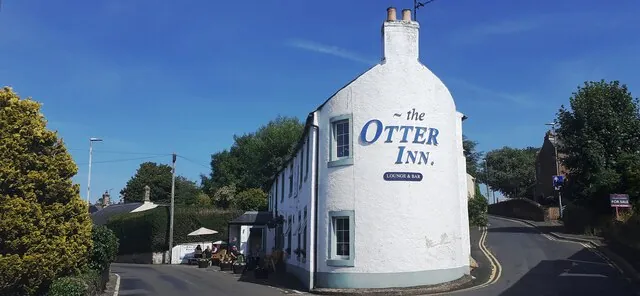
Opening hours
| Mon | Closed |
| Tue | Closed |
| Wed | 17:00–21:00 |
| Thu | Closed |
| Fri | 16:00–00:30 |
| Sat | 14:30–00:30 |
| Sun | 14:30–21:00 |
Hours last checked August 2026, about 2 months ago.
Hours are kept by hand and change without warning. Ring ahead if it matters.
More like this
- Cheap pint pubs in Carlisle
- Food pubs in Carlisle
- Pub quiz nights in Carlisle
- Country pubs near Carlisle
Nearest to here
-
1.6 kmaway
-
2.8 kmaway
-
2.9 kmaway
-
3.1 kmaway
1 lost pub stood within 400 m of here. See what used to be around it
Sources
- The State Management Story
- CAMRA
- Shut up about Barclay Perkins: closing pubs in Carlisle
- Historic England list entry 1209676, The Cumbrian Hotel, Court Square: "built as The County and Station Hotel, latterly The County Hotel"
- Co-Curate: Carlisle Station Hotel, Court Square
- Companies House 00047297, The Silver Grill (Carlisle) Limited, incorporated 20 March 1896
- Brewery History Society: the 1920 roll of Carlisle & District State Management Scheme pubs
- Mike Tuer, "Pubs of Carlisle" Day 177, Old Photos of Carlisle and Surrounding Area (Facebook)
- Historic England, Countering the 'deadliest of foes': public houses of the Central Control Board and the State Management Scheme, 1916-73 (Clare Howard, Research Report 89-2018): Appendix C, gazetteer of scheme premises
- The Cumberland News, 8 July 1916: 'First State tavern: to be opened by Lord Lonsdale', with the list of licensed houses in the Cumberland Ward and Longtown divisions (via newspapers.com)
- Carlisle Journal, 21 July 1961, p. 9: 'There is a tavern out of town', a special feature with a map and advertisements from thirteen country inns (via newspapers.com)
- The Cumberland News, 9 April 1921, p. 10: Brampton bench, licence transfer of the Plough Inn, Little Corby (via newspapers.com)
- The Cumberland News, 11 June 1927, p. 15: Brampton Police Court, licence transfers (Plough Inn, Little Corby; White Lion Inn, Hayton) (via newspapers.com)
- The Cumberland News, 15 June 1946, p. 6: 'Inn licence transfer at Little Corby' (via newspapers.com)
- The Cumberland News, 27 September 1957, p. 18: Telford & Scott, the Plough Inn, Little Corby, for sale (via newspapers.com)
- The Cumberland News, 19 April 1919, p. 10: Walter P. Gibbings's notice of the Central Control Board's sale of 3 May 1919 (via newspapers.com)
- The Cumberland News, 4 November 1916, p. 5: 'The Control Board: progress of the Carlisle scheme' (E. C. Sanders's report of 1 November) (via newspapers.com)
Open question
An unsolved mystery
Why does the scheme's 1920 roll list a Plough Inn at Little Corby, number 107? It is separate from the Plough at Wreay, number 106, yet the Brampton bench's transfers from 1921 to 1946, a freehold sale in 1957 and the Haywain's 1961 advertisement all read like a house outside the scheme, and Historic England's gazetteer has no pub at Little Corby. The Board did sell a cottage with a small coach house at Little Corby in May 1919, lot 4 in the Cumberland News's notice of 19 April, but it does not call it a former pub.
If you know the answer, or where it might be found (an old photograph, a family story, a document), tell us and it goes into the history above.